Central Park

Since Friday was my last day of work, I have essentially been on vacation which has entailed some final adventures as well as preparations to leave.

I did not take any spectacular photos in Central Park. I wanted to, but my phone died while I tried to take a video. You’ll just have to search for images of Central Park in spring or find a book at the library with better photos than I could have taken.

I took the bus from my apartment and then hopped on the 1 train. I got off at 59th Street, along the southern edge of the park. There are signs and maps to direct visitors towards various points of interest, but I decided to just wander. I planned to emerge along the western edge because there was a restaurant I wanted to work up my appetite for over there.

Unlike in the Midwest, here in New York we have been enjoying a proper spring. It was 60 degrees and sunny, so I dressed in layers and brought a book with me to settle down with once I’d found the perfect spot.

My first thought after I can’t believe I’m really here, this is crazy was that you can tell that Central Park was carefully designed and constructed, that it is man-made. There is a network of paths, some for bicycles and some for pedestrians. There are small hills, bridges, tunnels, baseball diamonds (yes, people were playing), and open meadows. The ubiquitous food carts sell ice cream, hot dogs, nuts, and pretzels. You can ride in a bike or horse-drawn carriage. Next to a pond filled with rowboats, you’ll find an elegant restaurant. Visitors rest and take photos at a plaza with a fountain. A music shell invites performances. Despite all of the features and people, Central Park is quiet. You can still see buildings rising around it, but the traffic noise decreases and the spacious paths allow you to freely move at your own pace, without trapping you in a surge of pedestrians. We all hear about the glory of Central Park in autumn, but spring is magnificent. The trees have filled up with fresh green leaves and the blossoming trees dazzle with pink and white petals. Tulips of all colors have been planted, and there are numerous species of trees, shrubs, and bushes. There are birds (other than pigeons!) and squirrels. When I reached the lake at the center of the park, I feasted my eyes on the breathtaking view across from me-the peaceful lake, then the trees, then the city skyline above it all. Once more it hit me: I can’t believe that I made it here. I never could have imagined this.

I eventually found a bathroom, and then a shady place to read at the base of a tree. I relaxed for a long while and then got up to go. I exited the park at 94th Street, went for lunch, then visited the library to finish the book and return it. I am extremely grateful that it warmed up here, that spring arrived, and that I got to begin my goodbyes at Central Park.
The Morgan Library & Museum

I visited the Morgan Library & Museum.

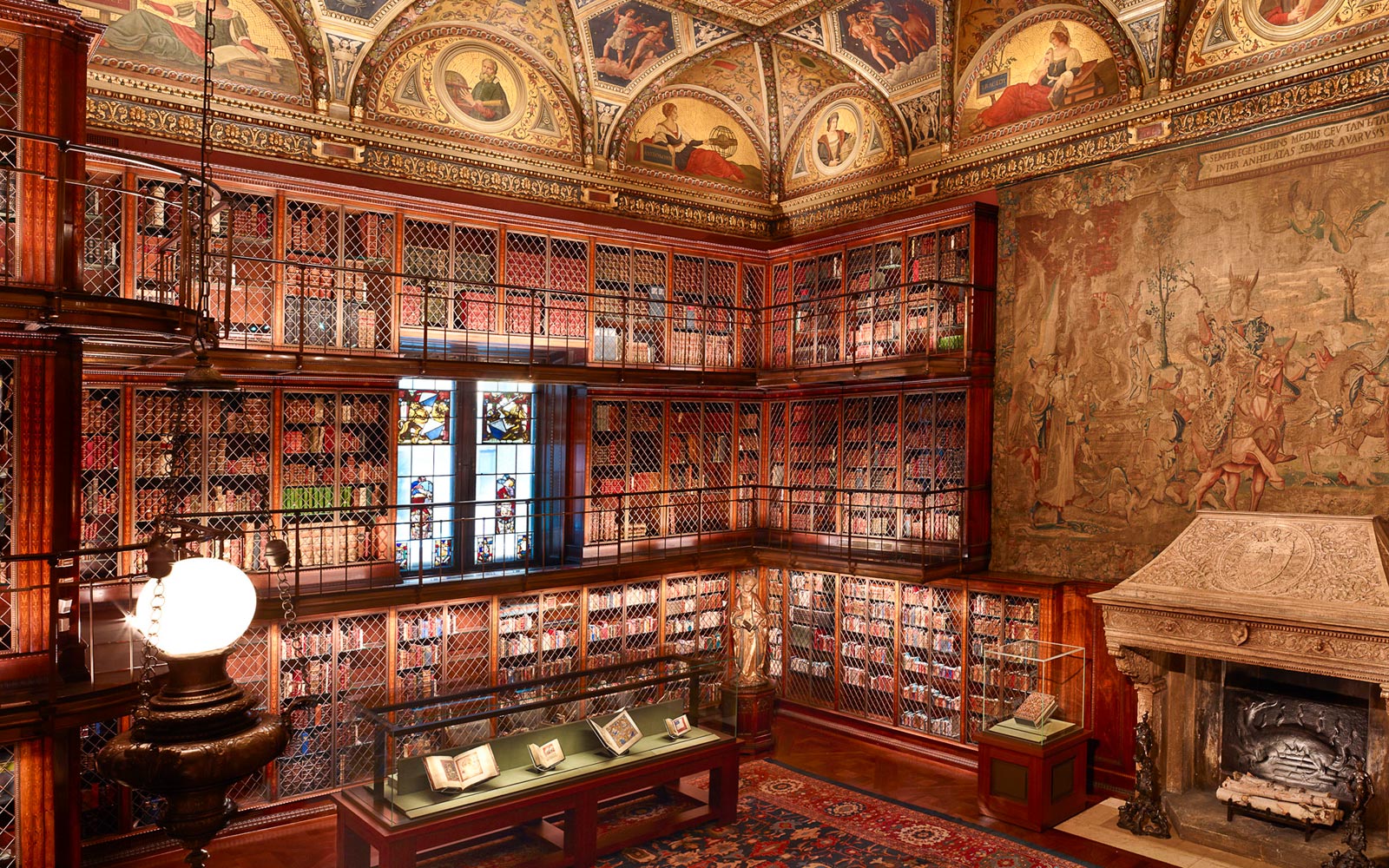
Photo from https://www.themorgan.org/

The museum’s major attraction right now is the Tolkein exhibit. I wandered in 20 minutes before the guided highlights tour and opted for that, rather than wait for a timed entry to Tolkein. I was more interested in the history of the the library.

Pierpoint Morgan (1837-1913) built his personal library next to his house. It was constructed from 1903-1906 under the direction of architect Charles McKim. John P. Morgan, Pierpont’s son, opened the library to the public in 1924. Both Mr. Morgan and J.P. lived in brownstones on Madison Ave. Mr. Morgan traveled extensively and had the library built in the Italian Renaissance Revival style; Mr. McKim called him Lorenzo the Magnificent. The entrance chamber, or rotunda, is topped with a painted dome styled after the Vatican. The rotunda’s artwork represents ancient, medieval, and Renaissance literature. Homer, Dante, Virgil, and Petrarch are depicted. The whole building is sumptuous.

Once the library was built, it needed a librarian. Mr. Morgan’s nephew, Junius, met a librarian at Princeton and brought her to Mr. Morgan for an interview. Her name was Belle da Costa Greener and she was from Washington, D.C. Her father was the first African-American Harvard graduate. Mr. Morgan hired her as the librarian. The tour guide said that there is only 1 biography about her and that it isn’t written in a way that is entertaining or fun to read, but I bet that Belle had an extraordinary life being a gainfully employed, young librarian in the city.

We entered the opulent main library pictured above. There is an underground tunnel linking the library to Mr. Morgan’s home, so naturally there is a bookcase with a lever to open the secret door. Hidden spiral staircases grant access to the upper tiers of the library. The collection is made up of 15,000 books, with hundreds of thousands more in the basement vaults. It is still a working reference library, and scholars can write to request items for research. Our tour guide shared a lot of interesting information about Mr. Morgan’s life and deeds, and he is certainly worth reading up on. Here are some tidbits about Mr. Morgan:

  • He liked to buy historically significant and exquisitely crafted objects.
  • He was president of the Metropolitan Museum of Art.
  • He completed boarding school in Switzerland and college in Germany. When he returned to New York, he wanted to bring back culture from around the world.
  • He founded J.P. Morgan and Company, at 23 Wall Street.
  • He was involved in the railroad industry (New York Central and Penn Central).
  • His business philosophy was consolidation and making economies of scale.
  • One of Mr. Morgan’s clients was Thomas Edison, and Mr. Morgan’s home was one of the first homes wired for electricity.
  • He consolidated the electric companies into General Electric.
  • He bought Carnegie Steel and made U.S. Steel.
  • When Roosevelt talked about “malefactors of great wealth”, he was referring to Mr. Morgan and his peers.
  • He testified for a Senate sub-committee at the end of his life (due to the next bullet point the government was suspicious of him), and told the Senate that he lent money on the basis of character.
  • There was a financial panic in 1907 because of an economic crash in Egypt and the earthquake in San Francisco. Apparently crashes tended to happen in September because that is when farmers would take money out of the bank to finance the harvest. There was no central bank in 1907, so wealthy men had to use their own money to “pump liquidity into the system”. Mr. Morgan invited his peers to the library and locked everyone in for discussions to raise capital and avert the panic. It was averted. The Federal Reserve began in 1913.
  • Mr. Morgan was devoutly religious and was a philanthropist.

Here are some highlights of the collection that I saw:

  • A tapestry that belonged to Henry VIII and is part of a set of tapestries illustrating the 7 deadly sins. This one is greed and shows King Midas challenging Apollo to a music contest.
  • Original scores by Berlioz, Schumann, Offenbach, Fauré, and Berg
  • A first printing, first edition copy of Don Quixote
  • The Principia Matematica by Sir Isaac Newton
  • A document signed by Queen Anne and Sir Isaac Newton
  • Winnie-the-Pooh by A.A. Milne (I assume first printing but I forgot to note it)
  • A Gutenberg bible; the Morgan has 3; there are only 49 remaining in the world, 21 of which are whole and complete.
  • A whole room of cylinder seals from Mr. Morgan’s ancient near-Eastern collection. Those interested in archaeology, check out information about the cylinder seals at https://www.themorgan.org/McKim/updates/mounting-seals-and-tablets

Visiting the library was a wonderful learning experience. It turned out to be right in my backyard and I had never realized how easy it was to get there from my apartment. The longer I have been in New York, the smaller and more manageable the city has become to me. After the tour and a quick stop at the gift shop, I ate lunch at Franchia Vegan Cafe. It was fantastic and I wish I had tried it sooner. Now I know where to eat next time!

I have one more blog post to write, about Central Park. Thanks for reading and take care!

The Tenement Museum

Well, I got a little behind on this blog. Let’s catch up!

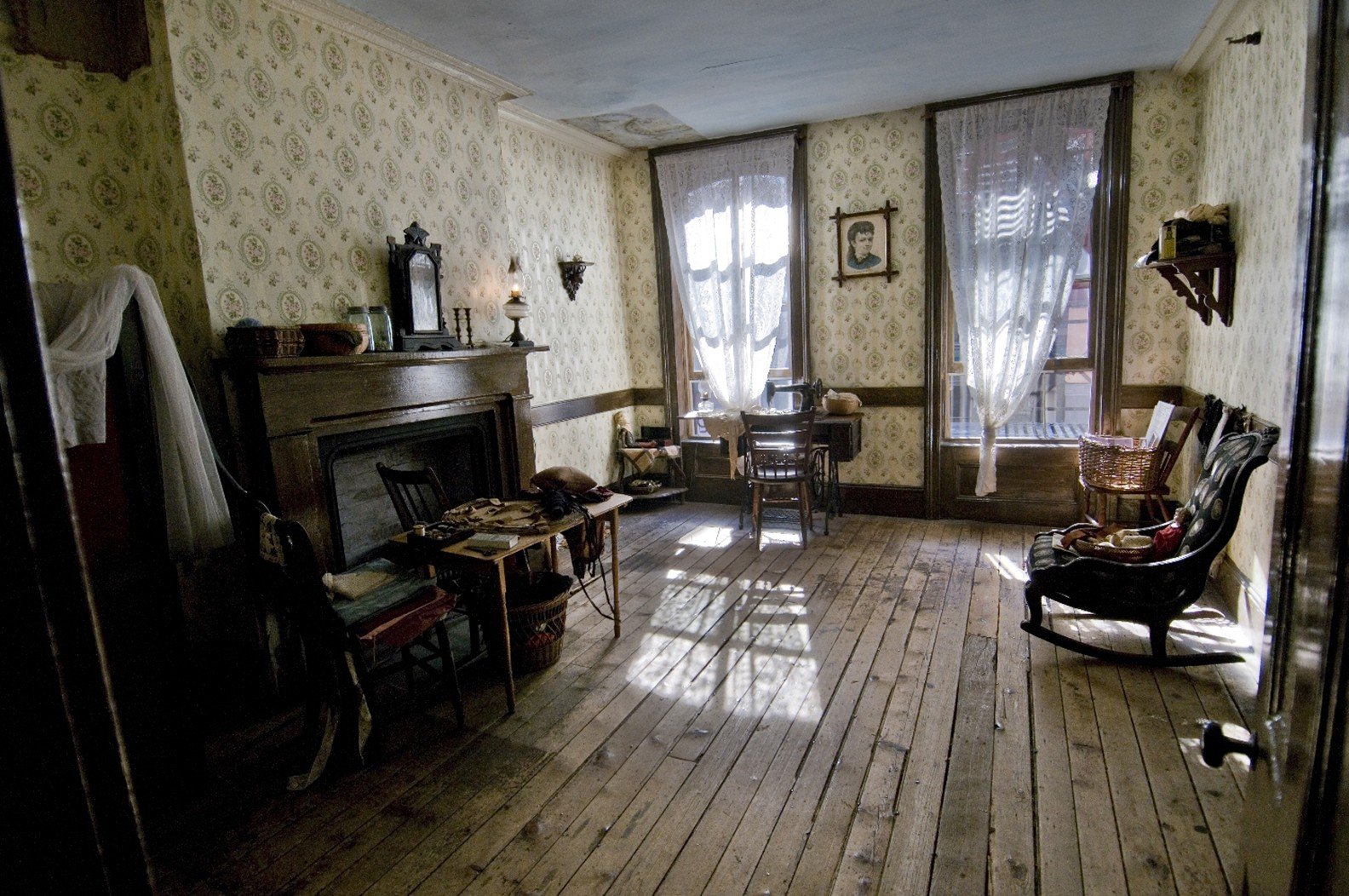
Nathalie Gumpertz’s living room
Photo from https://www.tenement.org/explore/97-orchard-street/

A couple weekends ago, I visited the Tenement Museum, suggested to me by a couple of friends. This museum is special because there is no general exhibit for you to wander through. You reserve your spot for the tour that interests you. Then, you tour the tenement building for that topic with a small group and a guide. The museum teaches about immigration history and life in New York City in the early 20th century.

I joined the tour for 97 Orchard Street. This tenement building was built in 1863 and was lived in until it closed in 1935. It was in disuse until the museum acquired it in 1988. Our tour guide told us that it is a 5, 4, 3, 2, 1 building: 5 floors; 4 apartments per floor; 3 rooms per apartment (kitchen, bedroom, living room); 2 toilets per floor; and 1 staircase. We learned about 2 families that lived in this tenement during 2 different time periods. The museum filled in the stories of these families through census data, charity records, and personal records and testimonies.

First, we learned about the Gumpertz family. Julius was a shoe maker who earned $10 per week. He lived in the tenement with his wife Nathalie and their children. In 1873, there was a National Panic in the United States. The unemployment rate was 25%. Julius was one of many men who, unable to support their families, abandoned them. He simply left for work one day and never returned. In order to survive, Nathalie started her own business. She became a dressmaker, working out of her living room. She earned $8 or $9, making about 3 dresses per week. When she received a letter that Julius’s father in Prussia had passed away and left an inheritance, she got her husband legally declared dead so that she could claim the money herself. She got the $600 inheritance and moved to 73rd St., on the upper east side, a much nicer neighborhood. By the time she died, she had turned that $600 into $1000 for her daughters. The museum found Julius’s real death certificate, showing that he died in Cincinnati in 1924.

Next, we learned about the Baldizzi family. The museum was very fortunate that a woman named Josephine, who had grown up in the tenement, approached them and offered her oral history. Josephine was the daughter of Adolfo and Rosaria Baldizzi. The couple also had a son. The family of four lived in the tenement until the building was closed and the family evicted. If you follow the link underneath the picture of Nathalie Gumpertz’s living room (above), you can read about the Gumpertzes, the Balidizzis, and other families that occupied 97 Orchard Street throughout its history.

Seeing the cramped dark rooms that the families lived in was very eye-opening. I can only imagine what it must have been like to come to the United States, and New York City no less, with nothing, and to struggle to survive every day. The Tenement Museum does an excellent job conveying the stories and I highly recommend a visit. There is no way that you can leave without learning something.

I was on the lower east side for the Tenement Museum, which put me in a great spot for eating. I walked through Little Italy and into Chinatown. I ate at Bodhi Kosher Vegetarian Restaurant. That’s right-vegetarian, kosher, Chinese, and delicious. I have not particularly enjoyed eating alone very much, but I wrote postcards and listened to tourists talking at the adjacent table. I had walked to the museum, about a 25 minute walk south of where I live, on a sunny and lively Saturday. On the way back, I stopped at my favorite ice cream parlor. It was an amazing day of walking, learning, and eating. What more could you want?

Buddha’s Delight Pan Fried Noodle from Bodhi Kosher Vegetarian Restaurant, if I’m remembering right. I might not be! Anyway it’s a pile of scrumptious veggies and sauce on top of crunchy noodles that soak up the sauce and soften.

Andy Warhol at the Whitney Museum

“There’s no country in the world that loves ‘right now’ like America does…We don’t have time to remember the past, and we don’t have the energy to imagine the future; we’re so busy, we can only think: Now!” -Andy Warhol, from his book titled America

The Andy Warhol exhibit Andy Warhol – from A to B and Back Again is presented at the Whitney Museum of American Art through March. I ended up there because my plan to go to the Morgan Library for the Tolkein exhibit fell through. Andy Warhol’s career spanned decades and he produced so much artwork I had never seen, encompassing serious themes as well as the pop art he became so famous for. I saw a lot and had a great time, so I guess Tolkein can wait!


CreditThe Andy Warhol Foundation for the Visual Arts, Inc./Licensed by Artists Rights Society (ARS), New York; Rebecca Smeyne for The New York Times
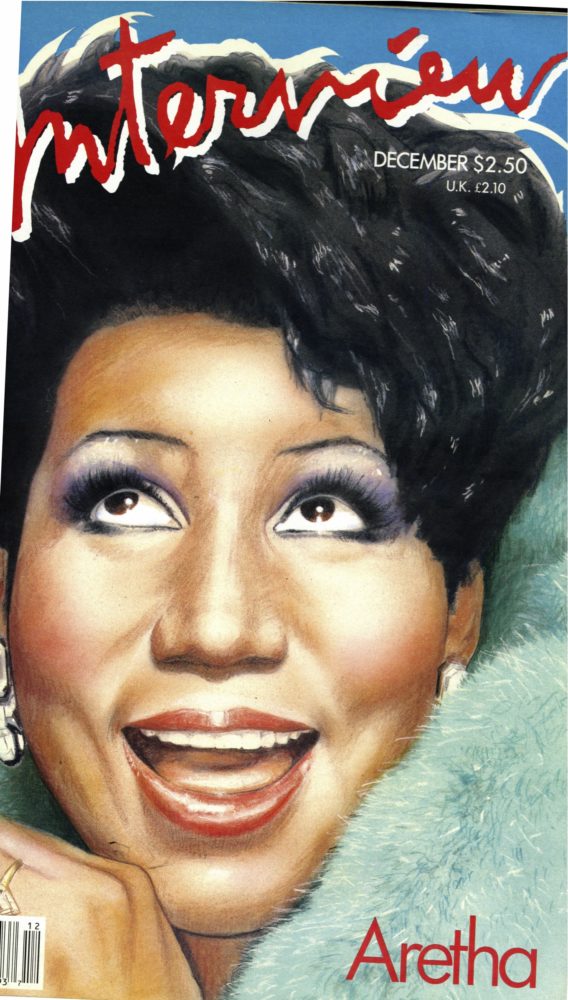
Aretha Franklin, Interview Magazine, December 1986

“His work anticipated the most profound effects and issues of the current digital moment, when we no longer know what images to trust.” -Whitney Museum of American Art exhibit statement

This New York Times article has a nice sample of photos from the exhibit. Unlike the artwork at the Met, it was more difficult to find quality photos of Warhol’s work online. Most of the paintings are rather large and it is easier to take them in, in person. I recommend a coffee table style book from the library to ponder the images if you can’t make it to the exhibit. 🙂

Here are the titles of some favorites, with * indicating absolute favorites.

Macintosh

Chanel

James Dean

Lifesavers

Paramount

New Spirit

Van Heusen Century Shirts

Lemon

Stevie Wonder, Interview Magazine June 1986

Aretha Franklin, Interview Magazine December 1986

Cher, Interview Magazine May 1982

Jack Nicholson, Interview Magazine December 1976

Truman Capote, Interview Magazine January 1979 (apparently Warhol was obsessed with Capote)

Flash, November 22 1963, 1968 Portfolio, Kennedy assassination

Saturday Disaster, 1964

Lavender Disaster, 1963

*Mustard Race Riot, 1963

Most Wanted Men, 1964

Before & After (4), 1962

129 Die in Jet, 1962 (first of the Death & Disaster series)

*Camouflage Last Supper, 1986

Skull, 1976

Ladies & Gentlemen, 1975

Stress! (Positive), 1985-1986

Stress! (Negative), 1985-1986

*Third Eye, 1985 (by Basquiat & Warhol)

I’ve hit the halfway point of my time in NYC, and there is still so much left to do! Usually during the weekend I manage one day of adventuring and one day of chores and rest. I may have to crank it up though! Thanks for reading.

The Museum of Sex

The Museum of Sex at
233 5th Ave, New York, NY 10016

Yes, it exists. Yes, we went there. Yes, we went there on Valentine’s Day weekend.

When I was in Spain, I walked back and forth in front of Madrid’s Sex Museum a few times and couldn’t overcome my shyness to go in. Thankfully, I had the opportunity to visit NYC’s own Museum of Sex and this time, I took it.

The museum is small. It had 2 floors dedicated to the artwork of Leonor Fini. She was an Argentine-Italian artist who created paintings, photographs, costumes, masks, and other works. Her work challenges the notion of women as soft, passive objects of desire, and of men as sexual pursuers, by reversing the roles. She presents women as participatory and powerful, and men as receiving. Some of her art is blatant, some abstract, such as the painting below.

Love Without Condition by Leonor Fini

You can read more about Fini on the museum website here.

Next we saw the exhibit Punk Lust: Raw Provocation. It used music, fashion, album and poster art to explore gender, sexuality, and the punk subculture of misfits and boundary pushers. We walked in to Lou Reed’s Take a Walk on the Wild Side playing on the speakers, which was perfect.

Took this one for my sisters who both love Patti Smith.
The photo isn’t very clear, but hopefully you can make out the text. I found it really interesting.

The exhibit drew a lot from from the New York City music scene so there was local interest. Check out the museum’s description of the punk exhibit here.

The next floor presented Stag: The Illicit Origins of Pornographic Film. The whole floor was dark to simulate being in a theater and also to make it easier to view the films, but it was difficult to read the descriptions. Here is the page on that.

The final gallery had various condoms, sex toys and dolls, outfits, and gear on display. This is what we had expected the whole museum to be like. The visitors on this floor were a lot more chatty and animated. There was a separate room with a bouncy house made of inflated breasts that you have to pay extra for (cosmetic surgery pun unintended), so after a stop in the crowded gift shop, we left.

The museum was fun and thought-provoking, even though there is so much more I expected to see. It was more artistic than I thought it would be. Because it is a smaller museum that embraces an immense topic, it will be worth paying attention to the rotation of exhibits. If someone wanted to visit NYC for a weekend, it might not make it on the itinerary, but for a longer stay like mine, it was a cool place to check out.

Harry Potter: A History of Magic

On 1/26/19, I went to the New York Historical Society to see the Harry Potter: A History of Magic exhibit. The exhibit was on loan from the British Library from October 2018 to January 2019. I made it just in time!

I had to reserve a timed entry in advance. I arrived, checked my coat, and entered at the designated time. Each room of the exhibit followed a different theme from among the subjects of study at Hogwarts: potions, herbology, divination, astronomy, care of magical creatures, etc. There were centuries old texts and scrolls describing and depicting practices of witchcraft and magic. There were other artifacts, such as tarot cards, a bezoar, and a broomstick. Also on display was artwork from illustrators who have worked on the Harry Potter books, notably Jim Kay (illustrated the phoenix above) and Mary GrandPré. Best of all, I got to see J.K. Rowling’s annotated manuscripts, handwritten notes, timelines, and original drawings. She had drawn a series showing how to tap the bricks behind the Leaky Cauldron to open the archway to Diagon Alley. She had also sketched Hagrid, and Harry with the Dursleys, among other things. I even saw some of her famous napkin notes. Seeing her creative work was very thrilling! The curators had lined the hallway leading out of the exhibit with international editions of the books. It was great to see all the beautiful and unique book covers.

Taking photos was prohibited, but that was a good thing. As one would expect, it was quite crowded and it was necessary to wait patiently to see each piece and read each placard. If people had been taking photos, it would have obstructed the space even more. It was wonderful to go there. Each visitor was so enthusiastic, and it was great to be in the company of such joyful fans.

Afterwards, although I could have seen the rest of the exhibits happening at the Historical Society, I was ready to leave. I ate lunch at the Peacefood Café, ending with an enormous wedge of carrot cake. It was a good day.

Vegan carrot cake at Peacefood Cafe

The New York Transit Museum

Entrance to the New York Transit Museum at 99 Schermerhorn St., Brooklyn

On Saturday 2/9, I went with my cousin to the New York Transit Museum in Brooklyn. Knowing it was in a decommissioned subway station, I naturally walked past it, looking for a street-level building.

We arrived in time for a curator-led tour of the Underground Heroes: New York Transit in Comics exhibit. The curator, Jodi, said that comics, newspapers, and mass transit all grew up together in NYC. She said that transit is a way to talk about a whole bunch of issues.

Here is my reading list, gleaned from the exhibit:

Puck & Judge

William M. Gaines

Alvin Carl Hollingsworth

Master Race by Al Felstein & Bernard Krigstein-This Holocaust story that takes place on a train and is considered the most important comic story written.

Prince of Cats by Ronald Wimberley

Stan Mack

“Samuel Peeps” of New York

Tenements, Towers, and Trash: An Unconventional Illustrated History of NYC by Julia Wertz

For Audrey: a topographic map and the term “Manhattan schist”

The rest of the museum was just as intriguing! They had a variety of historical maps on display, disused turnstiles, subway tokens, and other items of interest. Best of all, we got to descend to the track and walk through different subway cars from over the years.

This was one of the most fascinating destinations I’ve visited so far, and I highly recommend it.

The Metropolitan Museum of Art (2nd Floor)

On Sunday, 1/20, I woke up with energy and decided to tackle The Met. I procured a ticket, a map, and armed with pen and paper, set off into the museum. I decided to begin on the 2nd floor. The museum had just opened and I thought I’d head off all the folks waiting in lines to enter exhibits on the main floor.

The first works that caught my attention were sculptures by French sculptor Auguste Rodin. I’ve included links beneath the photos so that you can read about the works.

Eternal Spring
https://www.metmuseum.org/art/collection/search/193438
Mask of Rose Beuret; Rose was with Auguste for 53 years.
https://www.metmuseum.org/art/collection/search/207493
The Implorer by Camille Claudel. She was Rodin’s student and lover.
https://www.metmuseum.org/art/collection/search/207849

There were some Van Gogh, Picasso, Monet, and Manet paintings, yet Rodin’s sculptures captivated me the most and really made the visit worth it. After becoming enamored with Rodin, I checked out a temporary exhibition about jewelry. The galleries were dark, with each piece lit up to sparkle. There were magnificent, opulent examples, but there were some off-beat creations too.

The necklace above has a silver plaque in the center that reads vice and virtue and the vials contain…drumroll, please…human sperm! An older woman stepped up beside me and asked what it was, because she couldn’t read the inscription. “Is that liquid in there?” “Yes, human sperm!” We enjoyed some small talk after that lovely opener and then went our separate ways.

Sticks and Stones and Words breastplate by Kiff Simmons, made out of:
silver, pencils, erasers, stone, horsehair, coins, and leather
https://www.metmuseum.org/art/collection/search/495424
Finger and toe stalls from the Tomb of the 3 Foreign Wives of Thutmose III

I learned that:

  • Jewelry is the world’s oldest art form.
  • Maya earflares depicting Maize gods are worn turned inward, so the gods could speak directly into the ruler’s ears.
  • Egyptian jewelry was designed to make noise when it moved with the body to call the attention of deities such as Hathor. Visual images were also used with which the gods might manifest.

Here are a few other beautiful pieces that I saw in various galleries o the 2nd floor.

Gothic Windows in the Ruins of the Monastery at Oybin by Carl Gustav Carus
https://www.metmuseum.org/art/collection/search/439122
The North Cape by Moonlight by Peder Balke
https://www.norwegianamerican.com/featured/peder-balke-takes-new-york-by-storm/
Mihrab (Prayer Niche) from Iran, Isfahan
A.H. 755/A.D. 1354–55
https://www.metmuseum.org/art/collection/search/449537

I continued with a stroll through the Musical Instruments gallery. This was the moment I regretted not purchasing the audio guide so I could hear samples of the instruments being played. They had instruments made from various materials and from a wide range places and time periods. You can read about the exhibit at the Met’s website. https://www.metmuseum.org/about-the-met/curatorial-departments/musical-instruments

I concluded with a backtrack to other galleries where I saw paintings by Van Gogh and the other renowned artists I mentioned earlier in this post.

I spent 3 hours at the museum and only toured the second floor. Even then, I skipped some galleries that did not interest me as much. My ticket granted re-entry for Monday and Tuesday but I felt a little “cultured out” for the time being and did not go back. Still, maybe I will return at a later date to see what I missed.

My next blog post, whenever I get around to writing it, is going to be about the Harry Potter: A History of Magic exhibit at the New York Historical Society! That was yesterday, Saturday 1/26 and I can’t wait to tell all you Potterheads about it.

I also attended a Disney Spring 2019 Internship panel of former interns who are current employees of the company on Friday, 1/25. I met a fellow WMU Bronco there who is interning at ABC! I’ll give the details on that later too.

Thanks for reading!

The Black Comic Book Festival

From left: Deirdre Hollman, Dr. Rebecca Hall, and Kamau Ware

On Saturday 1/19 I attended the Schomburg Center’s 7th Annual Black Comic Book Festival, and I had a fabulous time. It took place at NYPL’s Schomburg Center for Research and Black Culture, located in Harlem. You can read a brief summary about Arturo Schomburg, for whom the branch is named, here. https://blackpast.org/aah/schomburg-arturo-alfonso-1874-1938

There was already a line of eager visitors of all ages waiting to enter when I arrived, some in costume! Inside, there were tables with writers, artists, and creators selling books and other original works. It was so packed that it was hard to move around. I made it for most of the panel discussion I wanted to see that day though: Black Villains Matter. The panelists shared their favorite villains, including Black Adam, Alex Wilder (the David Walker run was recommended), Killmonger, Amanda Waller, Mariah Stokes, Madame Slay, Black Manta, and Prowler. Not only did they discuss what they enjoyed about these villains, but they examined them on a deeper level too. For instance, it was said that Prowler had to work outside of the system, or work the system, to get what he needed because the system doesn’t work for black and brown people like it does for white people. That is one reason why readers may feel sympathetic towards, and supportive of, these fictional villains. I do not know the name of the panelist who illuminated that, but it made for a very thought provoking discussion. The panelists recommended some titles too- The Life and Times of Martha Washington in the Twenty-First Century and Harriet Tubman: Demon Slayer were both mentioned. Libraries and comic book stores should have lots of choices when it comes to creators and characters of color.

The books I bought, from left: Superb #1 (variant), by David F. Walker and Sheena C. Howard; Princess Lovepon- Chapter 1: First Kiss by Shauna Grant; and Crescent City Monsters by Newton Lilavois and Gian Carlo Bernal

I shopped around after the presentation and saw many eye-catching books, and I bought a few. Then I returned to the auditorium for Animating History: Comics and the Archival Record. Dr. Rebecca Hall spoke about her forthcoming graphic novel Wake: The Hidden History of Women-Led Slave Revolts (Simon & Schuster, 2020). She described her challenging process of archival research. She wanted to know why women are in records of slave revolts, but why people tend to associate slave revolts with male leaders and not as much with female leaders.

Kamau Ware followed with the story of the Black Gotham Walking Tour. He talked about the process of “erasing erasure” with imagination and technology through a project that will become a graphic novel. The project is called Other Side of Wall Street. Here is the link: http://blackgotham.com/category/home/art/

Other panels that took place Friday and Saturday were: Creating Black Fantasy; AfroPuertorriqueños: Cultural & Social Activism in Comics; Curating Black Nerdy Spaces; #FortheCulture: New York City in Comics; Coming of Age: Black Boys in Comics; How to Launch Your Comic Kickstarter; Cosplay Showcase; and Scripting Our Stories: Black Women Writers in Comics. What an excellent showcase of creators and scholars! I wish I could have heard each conversation.

All that fun built up an appetite. I savored a late lunch at the Ethiopian restaurant Zoma. I tried the Atakilt Wett (carrots, potatoes, cabbage) and Shiro Wett (legumes), and sampled the spiced tea. All were delicious, and I got a start on my new comics while I waited for the food.

That’s all for now. Expect another post soon about my visit to the Met!

Weekday Wanderings

A little bit of color on a gray day, seen on 55th St.

I have been walking during my lunch breaks. I’ve seen Rockefeller Plaza, NBC and HBO studios, St. Patrick’s Cathedral, Carnegie Hall, and reached Central Park’s southern side. It’s amazing that everyone walks so quickly, but even as I peer around, I too pass up slow walkers!

The people watching is as entertaining as you’d expect. The most “New York” thing I’ve seen so far is a man who walked past everybody on the up escalators in the subway station, eating a slice of pizza on a paper plate as he went. Clearly the off-putting nature of the subway station is no match for man’s appetite.

I also saw a lady applying her full face of makeup on the bus and just this afternoon my heart skipped a beat for a man rollerblading in the streets. He squeezed between a parked van and a moving vehicle and had his hand pressed to the side of the car, bracing himself. These people are bold and daring, or maybe they simply just don’t care. To those of you who live in big cities this may not sound particularly unusual or intriguing, but I enjoy it.

I discovered the Turnstyle Underground Market at the station on the way home. It had nice little stores and I bought a fancy vegan carrot cupcake. That was a very pleasant surprise, although it did not surpass the carrot cake from The Loving Hut or Chicago Diner.

So today was the day for getting out of work early for the holiday weekend, a haircut, lunch at a Thai restaurant I found along the way (Chai Thai Kitchen, $9.95 lunch special), the train back to my bus route, the bus home, and generally a lot of walking. Tonight is for blogging, reading, and postcards. Tomorrow is the Black Comic Book Festival, and there may be other adventures in store this weekend. Thank you to those who have been staying in touch with me, and to those who have shared recommendations of places to go. Here are some more photos.

50th St. Station tile work to match my previous photo
Overlapping buildings
Not my photo of St. Patrick’s Cathedral- from Shutterstock